What does 14,782 hours of Rust actually look like in a solo wipe?
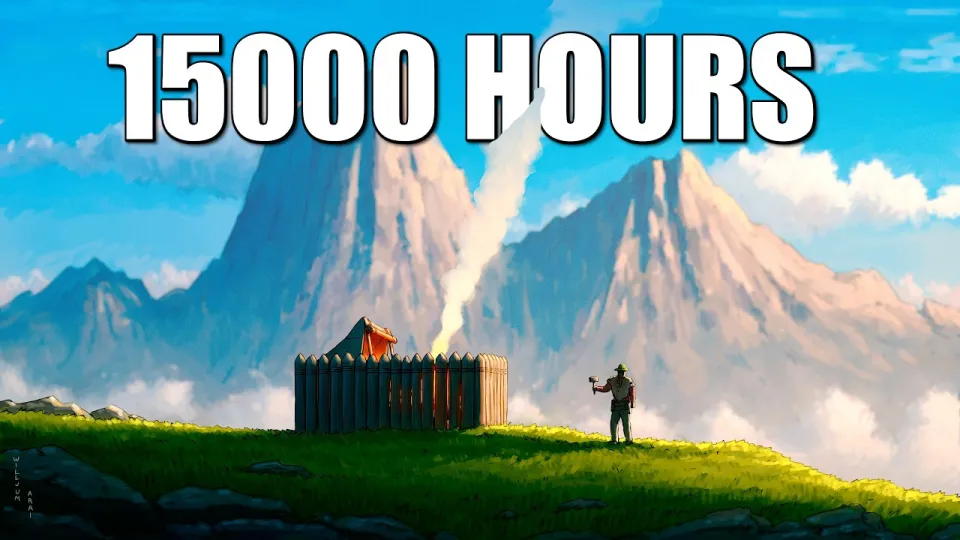
Video: How a solo with 14,782 Hours plays official rust...
Want articles like this for your own video to promote it on YouTube and Google? Order them through the Telegram bot @sat_sit_bot. Articles with your video embedded are written and posted by the bot itself — on popular topical sites (no ads). Free trial — 50 articles.
· based on the channel Willjum
Key takeaways
- The player has logged 14,782 hours in Rust, roughly 1,850 hours per year since the 2018 full release.
- The video is a solo survival run on an official Rust server, focusing on base building, farming and PvP encounters.
- A key strategy shown is building a compact, low-profile base to avoid attracting large groups.
- The player demonstrates efficient scrap farming and crafting priorities, including multiple nail guns.
- The video is presented by Willjum, who also runs a network of community Rust servers.
A solo player with 14,782 hours in Rust approaches an official wipe with a clear plan: build small, farm efficiently, and avoid unnecessary fights. That hour count translates to roughly 1,850 hours per year since Rust's 2018 full release, or about 35 hours a week — enough to know every monument, loot table, and building trick. The video breakdown by Willjum shows how that experience turns into concrete decisions on a high-population official server, and it also includes a sponsor offer: viewers can get 15% off plus free shipping on Manscaped's Beard Hedger Plus with code WILLJUM15 at manscaped.com/willjum.
How does 14,782 hours change a solo Rust wipe?
Experience in Rust shows up less in flashy PvP and more in risk management. A player with 14,782 hours knows which monuments to contest early, when to farm versus when to rotate, and how to read server population trends. In practice, that means:
- Base location: choosing a spot away from clan-dominated monuments but close enough to a recycler and a safe zone.
- Build design: using a compact footprint with multiple airlocks and a low profile to avoid drawing attention.
- Farming routes: prioritizing scrap runs that can be completed quickly and with minimal exposure.
- Crafting order: getting a workbench and key tools early, then saving scrap for blueprints rather than gambling on random loot.
- PvP discipline: taking fights only when the advantage is clear, and disengaging when a group shows up.
These choices are not unique to a veteran, but the consistency with which they are applied is what separates a 14,000-hour player from someone with a few hundred hours. The video shows this through a wipe that includes base building, farming, and a few tense encounters.
What base building approach does the solo player use?
The base is deliberately modest: a small footprint with stone or metal upgrades, multiple doors, and no obvious loot room. A common veteran tactic is to build in a wooded or rocky area with natural cover, and to use a mannequin or other decoy to draw fire away from the real entrance. The video's base build, credited to a community builder, follows this philosophy: it is not meant to withstand a full clan raid, but to make the cost of raiding higher than the potential loot.
Key features of such a base include:
- Compact core: a 2x2 or 2x1 core with an airlock and a secondary loot room.
- Vertical expansion: a second floor for sleeping bags and storage, accessible only through the core.
- Decoy placement: mannequins or other items placed to mislead attackers about the base's layout.
- Limited external presence: no large furnaces or wind turbines visible from outside, which can signal activity.
This approach is not about hiding forever; it is about buying time and making the solo player a less attractive target than the neighboring clan bases.
How does a high-hour solo player handle resource management?
Scrap is the bottleneck for solo progression, and a veteran player treats it as a currency to be invested, not spent. The video shows a player who prioritizes blueprints for essential items — workbench, metal tools, and weapons — while keeping enough scrap for trade at bandit camp or outpost. Farming runs are planned around monument puzzles that yield components and scrap, and recycling is done efficiently to maximize output.
A typical progression might look like this:
- Early wipe: secure a base location, place a sleeping bag, and farm enough wood and stone for a starter base.
- First scrap runs: complete green card puzzles at low-tier monuments, recycling components into scrap.
- Blueprint investment: unlock a tier 1 workbench and key blueprints (nail gun, crossbow, metal tools).
- Mid-wipe: expand to tier 2 workbench and start crafting weapons and armor.
- Late wipe: use surplus scrap for raiding or trading, depending on the server's state.
The video's protagonist is seen crafting multiple nail guns, a cheap but effective weapon that can be spammed in close-quarters fights. That choice reflects a pragmatic approach: a nail gun costs far less than a rifle and can be replaced quickly after a death.
What typical questions do viewers have about solo Rust survival?
Viewers often ask how a solo player can survive on official servers where groups dominate. The answer is partly psychological: avoid fights you cannot win, and use the environment to your advantage. Another common question is how to deal with bears and other wildlife, which can be as dangerous as players. A veteran player learns to listen for footsteps and animal sounds, and to keep a clear escape route. Finally, many wonder about the time commitment: 14,782 hours is not required to enjoy Rust, but it does illustrate how much map knowledge and game sense can be built over years of play.
What links and resources are mentioned in the video?
The video description includes several links for viewers who want to support the creator or join his servers:
- Manscaped sponsor offer: https://manscaped.com/willjum
- Patreon: https://www.patreon.com/Willjum
- Twitch: https://www.twitch.tv/willjum
- Twitter: https://twitter.com/willjum1
- Creative Commons license: http://creativecommons.org/licenses/by/4.0/
These links are provided for convenience; the article does not endorse any product or service.
Conclusion: what makes a 14,782-hour solo wipe worth watching?
The video is a case study in how experience translates into calm decision-making under pressure. A solo player with thousands of hours does not necessarily win every fight, but they avoid the fights that lead to a lost wipe. The base is small, the farming is efficient, and the PvP is selective. For viewers who want to improve their own solo game, the takeaway is to focus on risk management and resource efficiency rather than raw mechanical skill. Willjum's breakdown captures that mindset in a single wipe, and for those interested in the sponsor offer, the 15% discount and free shipping on the Beard Hedger Plus is available at manscaped.com/willjum.
Questions & answers
How many hours does the player in the video have in Rust?
The player has 14,782 hours, which is roughly 1,850 hours per year since Rust's 2018 full release. That is about 35 hours per week, equivalent to a part-time job sustained over many years.
Is it possible to enjoy Rust as a solo player without thousands of hours?
Yes. While experience helps, solo Rust is more about decision-making than raw hours. Focusing on base location, farming efficiency, and avoiding unnecessary fights can make a solo wipe enjoyable even with fewer hours.
What is the best base design for a solo player on an official server?
A compact base with multiple airlocks, a small footprint, and no visible high-value loot is ideal. Using decoys like mannequins and building in low-traffic areas can also reduce the chance of being raided.
How do you deal with bears and other wildlife in Rust?
Bears are a common threat, especially for solos. Listen for animal sounds, keep a ranged weapon ready, and avoid areas with dense wildlife unless necessary. A veteran player uses game sense to avoid surprise attacks.
Source: How a solo with 14,782 Hours plays official rust... · Markdown version